


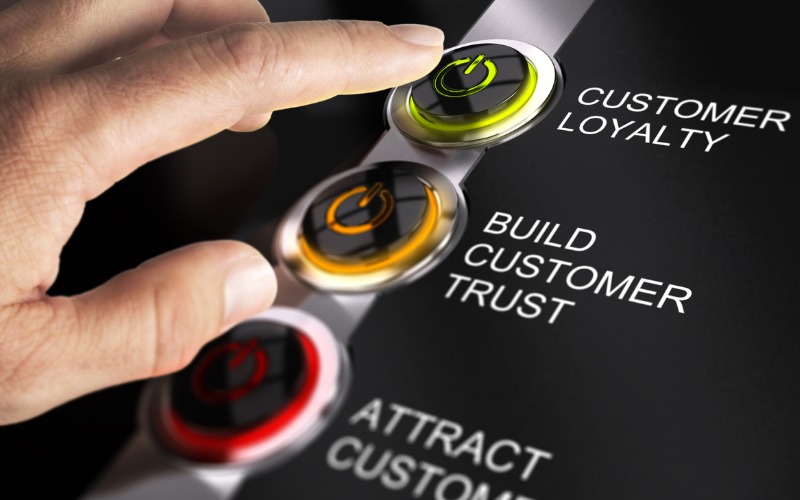
Trust is a critical component in the evolution of CX, particularly in a world and consumer landscape ravaged by the impact of COVID 19. Without trust, it’s almost impossible to build customer engagement and loyalty. Trust can make or break a business. Yet, in today’s digital world where things are constantly being disrupted, establishing trust is a significant challenge.
These days, consumers have an increasing array of options available to them. Across multiple industries, digital technology has allowed new brands to quickly emerge and challenge established brands, thereby creating a multitude of new and competing offers.
Today’s consumers are also savvier and more wary of promises made by corporations. Via the Internet and social media, they have far greater access to information to base their decisions on. They also have access to online reviews and comparison websites to help evaluate their options.
In the last year, the pandemic has heightened consumers feelings of anxiety, leading to panic buying across the country. Though they may be highly skeptical of the promises made by companies, consumers, now more than ever, want to deal with brands they can trust.
Why companies fail to build trust

Laura Mazin, director for CX consultancy AchieveAble, says, “Fostering trust is about making people feel good about doing business with you. It’s earned by companies who do what they say they are going to do and deliver a level of service and quality that they commit to. It’s about making customers feel important and valued.”
Most brands, however, are unable to establish a widespread feeling of trust with their customers. A significant part of the problem according to Mazin, is that companies have legacies, histories, established ways of doing things and operate in silos. They can’t maintain consistency in the way they communicate and deliver service to their customers.
Mazin comments, “Maintaining consistency across your people, your processes, your systems can be really very tricky. So, you may have a contact centre of a 100 people. 50 of them are providing customers with service in a way that engenders trust and is very positive. The other 50, for whatever reason, whether it’s lack of training or time pressures, haven’t quite got it”.
The perception a customer has about a brand is formed from all the experiences they have with it. If the quality and nature of those experiences is inconsistent then trust will prove to be elusive.
Confidence versus trust

Ayelet Mendel-Girin, head of customer experience for the Humm Group
Ayelet Mendel-Girin, head of customer experience for the Humm Group, believes that many organisations don’t strive to build trust with their customers. Most rest on their laurels if they achieve confidence. She says, “There are two stages or levels when it comes to building trust. The first level is confidence. Confidence is built through privacy and reliability. Privacy, in that peoples data and information is properly handled and kept safe. Reliability is you do what you say you are going to do”.
Ensuring customers have confidence in your brand is an important first step in building trust, but you need to go way beyond privacy and being reliable. Ayelet Mendel-Girin, identifies four pillars when it comes to building trust:
- Interest and empathy – Empathy is all about walking in your customer’s shoes, and understanding and being sensitive to their thoughts, feelings, and experiences. You need to be able to demonstrate to customers that you have their best interests at heart and making sure their perspective is factored into every decision you make.
- Truth and transparency – Being transparent means you have nothing to hide. It implies openness combined with communication and accountability. Clear, accurate and transparent communications with your customers is the bedrock for trust and customer loyalty. If you have made a mistake or a problem has occurred ensure you own it and explain honestly how it occurred and how decisions are made. Ensure all information is easily accessible, is easily understood, and is kept up to date.
- Support – Customers feel confident when the organisation provides what it promised, but trust is engendered when the organisation goes above and beyond to resolve an issue or fix a problem. Mendel Girin comments, “When companies do what they say they are going to do you gain confidence. But trust typically is engendered in a ‘high risk’ situation. When people need help is a perfect opportunity to act and establish trust with a customer.”
- Social responsibility – Most consumers prefer to deal with companies that operate on an ethical basis. They want to make a positive difference with their purchases and prefer to deal with brands that treat their employees well and are committed to supporting the community at large.
Years to build, moments to destroy
Trust needs to be built into every aspect of your business and in the design of your processes, according to Mazin. She observes, “The task is somewhat less daunting for a start-up or an organisation establishing in a greenfield situation where trust can be built-in from the start. For existing companies, with all their baggage, it takes time and it’s a big effort to build trust.”
“It takes money to re-engineer the processes that underpin your business operations. You may need to change the behaviour of everyone in the organisation, which requires extensive training and coaching. All this takes time and effort”.
It may take considerable time and effort to build trust with a customer. It can take only moments to destroy it or at least severely damage it. Then it can take a long time to repair.
In recent years there’s been a number of very public data privacy breaches and scandals. Poor data privacy and the inappropriate use of customer’s data, more than any other factor, has eroded the trust consumers have with organisations. Research from McKinsey highlights how consumer trust levels, though they vary across industries, are very low in terms of data privacy and security.
How do we measure trust?
If trust is something we must build and aim for, how do we measure it and what metrics do we apply to assess if we are achieving it and what is it contributing to the business? Mazin recommends the following as general indicators of trust, “Trust is evidenced in a number of ways including repeat business, increased customer lifetime value, improved customer retention, and increase in word-of-mouth referrals for the business”.
To a large extent what defines trust and how to measure it will vary from organisation to organisation and from industry to industry. Each organisation must come up with its own way of describing trust, the type of behaviour it entails and how to assess it.
Mazin advises, “Companies can include trust-based questions in their surveys and customer feedback programs to get a sense of how trustworthy they are. Pick a handful of your most relevant “customer experience basics” like getting it right the first time or keeping customers informed, around which to design your questions.”
Whatever metrics used, according to Mendel-Girin, should be designed around the strategies and behaviours you are using to create trust. “The way I measure trust is based around the four pillars I use to implement trust. So, based on the first pillar of empathy, we would ask in a survey – do you feel that we act in your best interest?
Trust, experience and loyalty
If you are serious about customer experience, then you must become serious about earning trust. Customer experience, trust and loyalty are so connected that any attempt to create seamless positive experiences for customers must be about earning trust. As 2021 rolls on and the impact of the pandemic continues being felt, the ability to engender trust with customers will become critical for companies looking to grow.
