


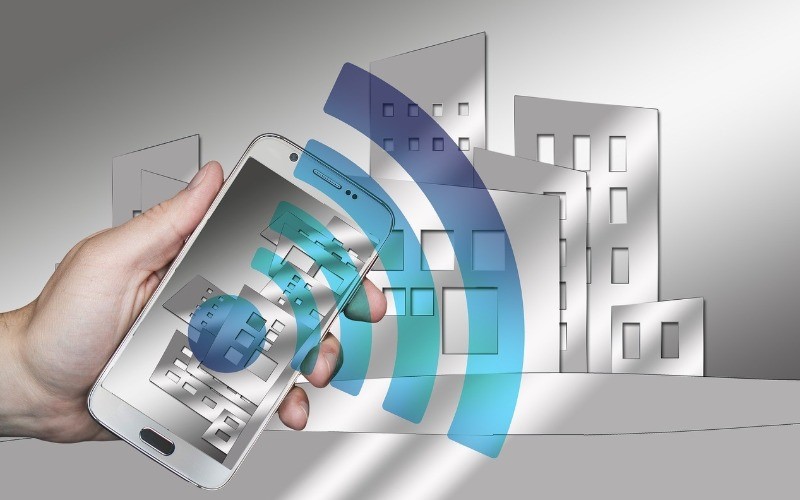
The creation of smart places has become an indispensable feature of the customer experience. For some time, hotels, airports, stores, entertainment venues and other location based brands have utilised mobile and digital technology to measure and analyse the traffic patterns of people. IoT (Internet of Things) is expected to accelerate the growth and evolution of these smart places.
Findings from a recent survey by Altimeter suggest that smart places offer an opportunity for legacy brands with extensive physical outlets. That opportunity lies in the delivery of omni-channel customer experiences that online only brands can’t deliver.
E-commerce has largely replaced products and services that are easily digitised, like music, news and videos. However, customers still want to touch and feel physical products before they buy. Research highlights that 65% of consumers will go online to do product research but will go to a physical outlet to make the purchase.
Offering an exceptional customer experience is just as important in the offline world as online. According to a recent article published in the Sydney Morning Herald, Australian retailers are investing in a range of technologies to the improve experience customers have while shopping at a physical outlet.
The use of robots to direct customers instore, smart AR (Augmented Reality) mirrors to try out clothes, and the use of instore apps for promoting discounts and pre-purchasing items are just some of the technologies being tested and deployed. But the technology that holds the greatest promise is IoT (Internet of Things).
Small, smart AI enabled devices
Physical locations are the new battleground for digital disruption. The report from Altimeter highlights how small, smart AI assisted technology adopted by consumers as IoT wearables or smart devices in the home are finding their way into businesses. They are appearing in a range of industries, including transport, healthcare and retail.
The primary benefit IoT and connected smart devices is to improve the ability for tracking who and what happens to be in a smart place and tracking their movement and behaviours. This creates a data rich environment which can be analysed or used to trigger events. This data can also be integrated with data from existing customer channels.
Altimeter divides tracking devices into three categories:
- Facility Tracking: These devices have been included into the architecture and construction of a building. They can be used to control access and security, monitor and alter temperature.
- Object Tracking: Devices to track the use and movement of objects in the smart location
- People Tracking: Tracking people allows brands to better understand their customers, improve the level of service they provide and improve the design of the location
One scenario, as highlighted by the Altimeter research, involves a customer in a retail store using their mobile phone to connect with a smart shelf. As the smart shelf detects what products the customer picks up, it sends the phone real-time coupons or product information . Many location brands are deploying devices to help customers onsite such as interactive signage, AR mirror systems and smart cards to simplify the check-out process.
Smart places market set to double
The technology is at an early age of development but is expected to evolve exponentially in the next few years. Gartner estimates that the market for indoor location platforms will grow from $US7.2 billion in 2017 to $12.5 billion in 2020.
The explosion of devices and connected sensors means location and how we track people’s behavior in specific locations, will become more sophisticated, detailed and accurate. The most successful brands will learn how to harness the power of this data and technology to offer unique and tailored experiences for their customers.
