


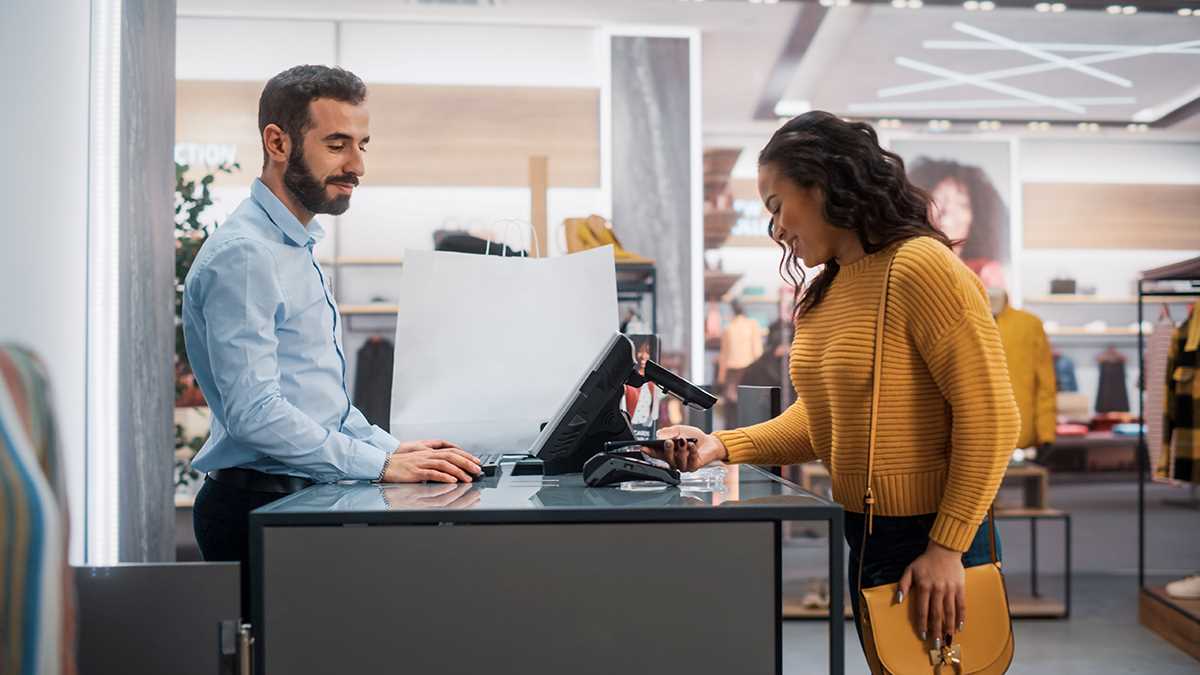
The way consumers shop has radically changed once again due to the global supply chain crisis that consequently limited product selection. Inflation and currency issues have also impacted the price of goods at a global scale. Adding to these pressures, consumer expectations have increased. Consumers are now looking for retailers to accommodate their personalised shopping preferences, both online and in-store.
According to SOTI’s new global research reportThe Tech Effect: Strengthening the Omnichannel to Meet Consumer Demands, retailers that do not leverage technology to enhance online and in-store shopping experiences risk losing consumers to competitors quicker than in previous years.
Consumers Want the Best of Both Worlds
To address challenges in the traditional retail business model, consumers are demanding increased flexibility and want to engage with retailers offering a seamless shopping experience online and in-store. The report found 43% of Australian consumers still prefer to shop online, an increase from 38% in 2021. While emphasising the strength of e-commerce, the research confirms a leaning towards a hybrid shopping model.
This is a trend seen among global and Australian consumers. Forty percent of Australian consumers prefer to buy items online and pick them up in-store (BOPIS), while consumers in Germany (68%) are most likely to continue shopping in-store.
In fact, 49% of Australian consumers prefer to shop with retailers offering an experience based on their individual preferences.
“It wasn’t long ago that retailers could put their different channels in silos and report strong bottom lines,” said Shash Anand, SVP of Product Strategy at SOTI. “Now, they need to deliver a seamless and personalised shopping journey that can only be achieved through utilising technology to ensure consumers are catered to at every touchpoint. Retailers can benefit from a connected and digitised backend infrastructure, as well as mobile tracking technology to instantly offer real-time information, speed up the shopping and checkout process for consumers and give consumers the choice of how they want items fulfilled.”
Transaction Deal Breakers
Both the purchasing process and fulfilment are important to consumers. Seventy-two percent of Australian consumers (66% of global consumers) expect to know where their order is within the delivery process at all times, and 65% (61% of global consumers) continued shopping with brands that could deliver goods to them the fastest. In fact, almost three quarters of Australian consumers (72%) went even further, saying that knowing a retailer’s delivery partner determines whether they will complete an order.
When it comes to ordering items, the top three options for Australian consumers are front door home delivery (56%), in-store delivery/collection (15%) and in-home delivery (11%). Additionally, 73% said delivery time and speed are still the most important to them, followed by returns, with 56% stating they are more likely to shop from an online retailer providing multiple options to return a product.
“With delivery charges increasing and delivery options broadening, retailers need to carefully select the right delivery partners to fulfil these heightened consumer expectations. In updating both hardware and software across their entire supply chain management processes, physical warehouses and stores, retailers can better inform their consumers of product availability and delivery timelines while ensuring consumers get the most bang for their buck,” added Anand.
Mobile Technologies to Support Product Availability
Nothing will turn a consumer away quicker than finding out the product they want to purchase is not available in-store. Alarmingly, the research shows that in Australia, 41% of respondents said the items they wanted to purchase have not been available. To address this, retailers not only have to know what inventory is available in their warehouses but also what timeframe goods will be dispatched and delivered.
“Supporting technologies that enhance levels of inventory forecasting is critical. In warehouses, it is important for retailers to have up-to-date and functioning barcode scanners and mobile computers that can scan and record available stock levels as goods come in and leave the premises. Mobile computers can also be used in-store to work through out-of-stock instances. A retail associate can inform a consumer an item is out of stock in-store.
However, with the right technology, the employee can use the device to record the consumer’s details, process a transaction online and have it delivered to their house as soon as possible. This can help turn a challenging customer service interaction into a purchase connecting a consumer with the goods they desire,” said Michael Dyson, VP of Sales, APAC at SOTI.
SOTI’s 2023 Retail Report, The Tech Effect: Strengthening the Omnichannel to Meet Consumer Demands, can be downloaded here.
Report Methodology: Commissioned by SOTI, Arlington Research, an independent market research agency, conducted 10,000 interviews using an online methodology, with adults aged 18 to 65 years old with nationally representative quotas on gender, age and region set at country-levels between October 26 and November 3, 2022. The 10,000 interviews were split across eight markets as follows: U.S., Canada, Mexico, UK, Germany, France, Sweden and Australia.
