


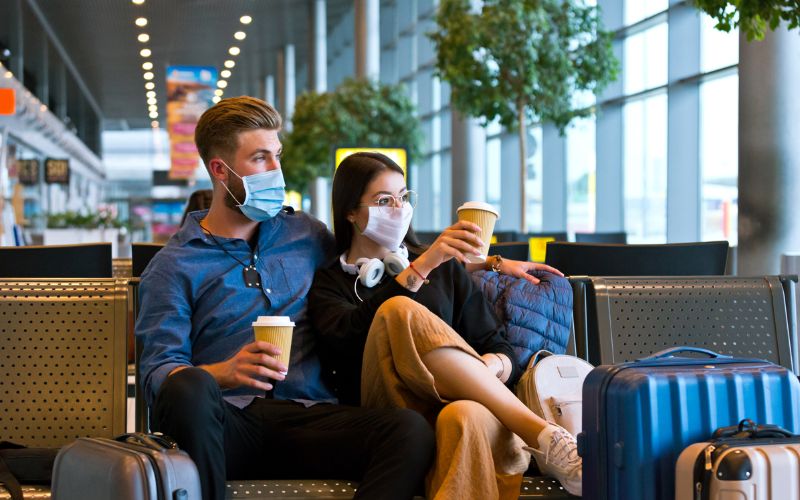
The travel, hospitality and tourism industries have been hit hard by the COVID 19 pandemic. These industries are expected to rebound slowly as the world emerges from the crisis and travel restrictions are lifted. CX is expected to be a critical factor in how quickly these industries recover.
At the beginning of 2020, travel was considered to be one of the most robust global industries. According to the United Nations World Tourism Organization (UNWTO), 1.5 billion international tourist arrivals were recorded in 2019, a 4% increase on the previous year. The World Travel and Tourism Council highlights how 10.4% of all jobs in the world were in the travel and tourism industries, contributing US$9.2 trillion to global GDP.
Then COVID struck. By the end of the year spending on international travel had shrunk by 76% as compared to 2019. In Australia the volatility and randomness of border closures and lockdown restrictions saw a 95% drop in the total number of domestic passengers carried in June 2020 as compared to June 2019.
The slow return to travel and tourism
Customer confidence and expectations, as highlighted by statistics from the Global Rescue’s Traveler Sentiment and Safety Study, are slowly rising as vaccine programs rollout across the world, though concerns and fears over the virus will linger for quite some time. Organisations in the travel and tourists industries will need to cater for these concerns and demonstrate a commitment to the safety and well being of their customers. Customer travel preferences have shifted to people avoiding crowded destinations and places with guaranteed access to medical services.
A number of travel brands let their standards slip during the disruptions caused by the pandemic. Chattermill notes that the responses to worried and frustrated customers were often delayed and callers to over busy phone lines were placed in long queues. Customer sentiment toward the travel and hospitality industry had dropped significantly by the end of 2020.
A recent report from the CX Network looks at how customer experience will be a critical strategy for travel and hospitality providers as we emerge from the pandemic. It emphasises that providers will need to focus on empathy, rewarding loyalty, frictionless technology and immersion.
Empathy – Empathy has always been a pillar of customer experience, but now it is taking on even greater significance in the wake of the pandemic. It’s important that your frontline staff can identify with and understand your customers’ situation, feelings and motives. Those companies that “get it” take the time to understand their customers and make a concerted effort to apply these insights to every aspect of their business.
Rewarding loyalty – By acknowledging client loyalty with rewards and perks that are relevant and valuable for customers, travel brands will be in a stronger position to boost customer lifetime values and if necessary rebuild customer trust and rapport.
Frictionless technology – Is any form of technology that makes the travel experience convenient, smooth and easy for the customer. From voice assistants to augmented reality features, there are many technological choices available to enrich experiences for travellers and accommodation guests.
Immersion – refers to technologies such as augmented reality overlays and virtual reality to facilitate experiences that literally immerse the customer. The CX Network report cites Disney Resorts and Legoland hotels as examples of brands who provide immersion successfully on a range of occasions – interactive dining experiences, hotel stays in Alice in Wonderland-themed rooms, or suites themed on Lego’s most iconic environments such as castles or pirate ships.
By immersing guests into the universe of a brand’s identity, travel and hospitality brands not only have a key tool to delight customers at scale, but to also charge a pretty premium.
Listen to customer feedback
In the past a significant number of Airlines and hotels fell short in terms of listening and acting on customer feedback. Research from Qualtrics of 1,700 travellers surveyed, revealed a significant portion believed that hotel and airline feedback never reached anyone who could make a difference. 46% of hotel guests and 48% of airline passengers believed that their feedback was ignored.
To succeed at customer experience it is not only important to canvass feedback from customers but to act on that feedback to make changes and improvements and inform customers their feedback has been acted on.
Personalisation
One of the biggest trends that emerge from the digital revolution and its impact on customer experience is that of personalisation. A great customer experience is typically a very personalised experience. This is particularly true in terms of travel, tourism and hospitality.
People’s travel itineraries are decided by their preferences, interests and tastes. We look for packages and travel experiences that are tailored as much as possible to our interests which we evaluate based on feedback and reviews from others.
Why CX is Important
When people have positive customer experiences, it anchors them to your brand and products. It can give your organisation a competitive advantage that is hard to beat. Companies in the travel and tourism industry that make customer experience a priority outperform competitors by 80%. 84% of businesses that focus on enhancing customer experiences report an increase in revenue.
As the world emerges from the pandemic and restrictions are lifted, more and more people will start booking flights and accommodation. Those providers that can ‘wow’ their customers with personalised experiences will recover quicker and start to grow their business compared to those that don’t.
